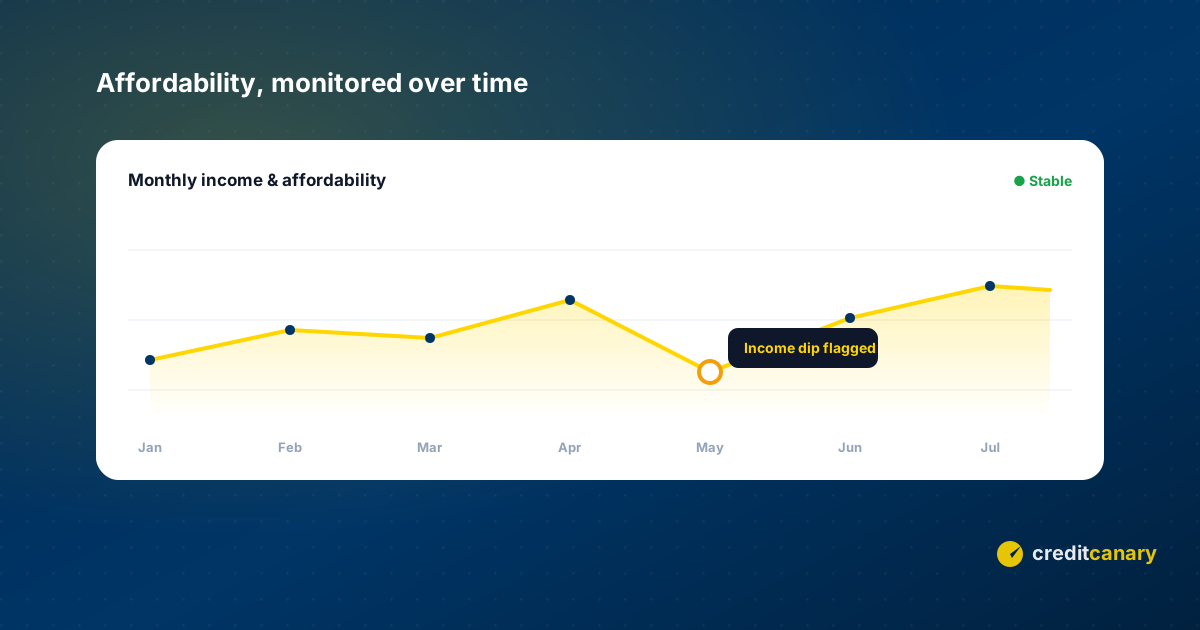
- Affordability and monitoring are two jobs: understanding a customer at the decision, and keeping that understanding current over time.
- The main approaches are bureau-modelled affordability, open banking transaction data, and unified platforms that combine both.
- The best fit depends on data quality, how monitoring is handled, and whether the API lands in your decisioning layer or a silo.
Search for the best UK affordability API and you will find a crowded field: credit bureaux, open banking providers, and platforms that claim to do it all. The honest answer to which is best is that it depends on what you are actually trying to do, because affordability and monitoring are not one job but two, and most tools are stronger at one than the other.
This is a buyer's guide for UK lending, credit risk and RegTech teams: the two jobs to be done, the approaches on the market, the criteria that separate them, and why how the pieces fit together usually matters more than any single feature.
Two jobs, not one
The first job is affordability at the point of decision: can this customer sustainably afford this commitment, based on their real income and outgoings? The second is monitoring: keeping that understanding current, so you can spot a change in circumstances, a fall in income or an early sign of difficulty before it becomes a missed payment. Consumer Duty raises the bar on both, because a lender has to show not only that a decision was reasonable at the time, but that it continues to act to avoid foreseeable harm.
Many tools do the first job and stop. The ones worth shortlisting treat affordability and monitoring as a continuum served by the same data, not two disconnected products. Our deeper guide on open banking affordability checks covers the first job in detail; here the focus is comparing options across both.
The approaches, compared
Three broad approaches dominate the UK market:
- Bureau-modelled affordability. Estimates income and expenditure from credit file and demographic data. Fast and consent-light, but it is an estimate, and it is weakest exactly where it matters most, for thin-file and self-employed customers.
- Open banking transaction data. Reads real income and outgoings from the customer's account with their consent. Far more accurate and current, and the same feed can power ongoing monitoring. It depends on consent and on the quality of the categorisation behind it.
- Unified platforms. Combine bureau, open banking, identity and internal data in one decisioning layer, so affordability and monitoring sit alongside the rest of the decision rather than in a separate tool.
What to compare
Once you know which jobs you need done, judge the options on:
- Data quality. For open banking, categorisation and income-detection accuracy are everything. Test on real, messy cases.
- Monitoring model. Does the tool support a refreshed, ongoing view on renewed consent, or is it strictly point-in-time?
- Signals, not just data. You want affordability, income stability, resilience and risk markers you can decision on, not a raw transaction dump.
- Consent and coverage. A clean consent journey protects conversion; broad bank coverage protects completion rates.
- Regulatory standing. Account information should be accessed under proper FCA-regulated permissions, read-only and revocable.
- Where it lands. An affordability score is far more useful inside your decisioning engine, next to bureau and identity data, than in a standalone portal.
Why a unified layer usually wins
Point solutions create integration debt and data silos: one tool for bureau, another for open banking, a third for monitoring, each with its own portal and none talking to the others. A unified layer avoids that. Credit Canary brings bureau data, open banking, identity and internal data into one place, turns consented transactions into verified income and real affordability, and keeps that view current so monitoring is continuous rather than a periodic report. The decision, and the ongoing duty of care behind it, run on one consistent picture of the customer.
Frequently asked questions
What is the best UK affordability API?
There is no single best API; the right choice depends on whether you need point-in-time affordability, ongoing monitoring, or both, and on data quality and fit with your stack. Open banking approaches are the most accurate for real affordability, and unified platforms add the benefit of one decisioning layer.
What is the difference between affordability and monitoring?
Affordability is assessed at the point of decision, can this customer sustainably afford this commitment. Monitoring keeps that understanding current over the life of the product, so a change in circumstances can be spotted early. The same consented data can serve both.
Is open banking better than a bureau affordability model?
For accuracy, usually yes, because it reads real income and outgoings rather than estimating them, and it is strongest for thin-file and self-employed customers. Bureau models are faster and consent-light, so the strongest setups use both.
How does this help with Consumer Duty?
Consumer Duty requires decisions grounded in a reasonable understanding of the customer and ongoing action to avoid foreseeable harm. Accurate affordability data plus continuous monitoring gives lenders both the evidence and the early warning the Duty expects.